
Black Friday Heated Airer & Clothes Dryer Ultimate Guide: Best Deals & Specs
With UK energy tariffs still forcing households to monitor every kilowatt, running a standard tumble dryer can burn through 60p to £1.50 per cycle. As winter 2026 approaches, it’s no surprise that heated clothes airers have become the most sought-after damp-busting appliance on the market.
Drawing between 198W and 300W, a heated clothes rack costs just 5p to 9p an hour to run. But with dozens of models flooding Amazon, Argos, and Lakeland this Black Friday, paying for the wrong design means ending up with damp, musty clothes.
This guide cuts through the marketing fluff to reveal exactly which heated airer is worth your money, based on capacity, drying speed, and real-world running costs.
Key Takeaways: Which Airer Should You Buy?
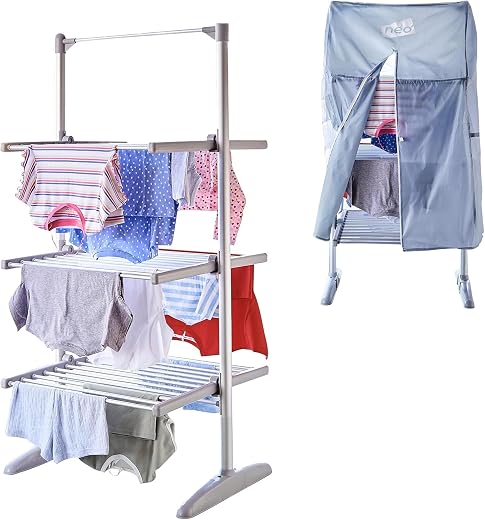
- Best Overall Performance: Lakeland Dry:Soon Deluxe 3-Tier – High capacity (15kg / 21m drying space), eye-level controls, timer, and ultra-low ~9p/hr running cost.
- Best Budget Buy: Beldray / Status Winged Heated Airer – Entry-level price under £50–£60; ideal for small loads and laying garments flat.
- Fastest Drying Time: JML DriBUDDi / Beldray Drying Pod System – Uses 800W–1000W fan-driven warm air to dry small loads in 2 to 3 hours.
- Best Value for Families: Minky SureDri 4-Tier with Cover – Holds 20kg of washing across 23m of space; includes a cover and timer out of the box.



🏆 At a Glance: 2026 Top Picks & Running Costs
Running costs are estimated based on a standard UK electricity cap average of ~28p/kWh.
| Model & Style | Energy Draw | Max Load | Hourly Cost | Best For | Expected BF Price |
| Lakeland Dry:Soon Deluxe (3-Tier) | 300W | 15 kg (21m) | ~8.4p | Total household reliability | £130 – £150 |
| Minky SureDri (4-Tier + Cover) | 300W | 20 kg (23m) | ~8.4p | Large families & heavy washes | £110 – £130 |
| JML DriBUDDi (Hot Air Pod) | 850W | 18 items | ~23.8p | Fast drying & fewer creases | £55 – £65 |
| Beldray Winged Heated Airer | 230W | 15 kg | ~6.4p | Budget buyers & flat-shares | £35 – £45 |
| Lakeland Dry:Soon Mini (3-Tier) | 198W | 15 kg | ~5.5p | Small flats & tight spaces | £95 – £110 |
🔍 Deep Dive Reviews: Which Should You Buy?
1. Lakeland Dry:Soon Deluxe 3-Tier
The Undisputed Heavyweight Champion of Winter Laundry
If you want an appliance that will last through multiple winters without the aluminum bars sagging, this is it. The Dry:Soon Deluxe offers a massive 21 metres of drying space and can hold a full 15kg washing machine load.
- Why it wins: The control panel is positioned at eye level (no bending down to a floor switch), and it features a built-in auto-shutoff timer—crucial for overnight drying without wasting electricity.
- The Catch: Lakeland often sells the zip-up cover separately.
- Black Friday Playbook: Do not buy this at full retail. Wait for Lakeland’s official Black Friday bundle that throws in the thermal cover and castor wheels for free.
👉 Check Black Friday Deals for the Lakeland Dry:Soon Deluxe 3-Tier on Amazon
2. Minky SureDri 4-Tier (with Timer & Cover)
The Ultimate Family-Sized Workhorse
Minky has aggressively challenged Lakeland by offering more vertical space and bundling the essential accessories out of the box. With 4 tiers, you get 23 metres of hanging space and a robust 20kg weight limit.
- Why it wins: The top tiers are slightly angled, making it much easier to hang longer items like trousers or bath towels. Plus, the thermal zip cover is included, which instantly saves you £30-£40.
- The Catch: The 4-tier design gives it a slightly larger footprint when fully opened compared to standard 3-tier models.
- Black Friday Playbook: Watch Amazon UK closely. Minky models are prone to massive “Lightning Deal” price drops during Cyber Week.
👉 Check Black Friday Deals for the Minky SureDri 4-Tier on Amazon
3. JML DriBUDDi (and similar Drying Pods)
The “Need It Dry By Tomorrow Morning” Savior
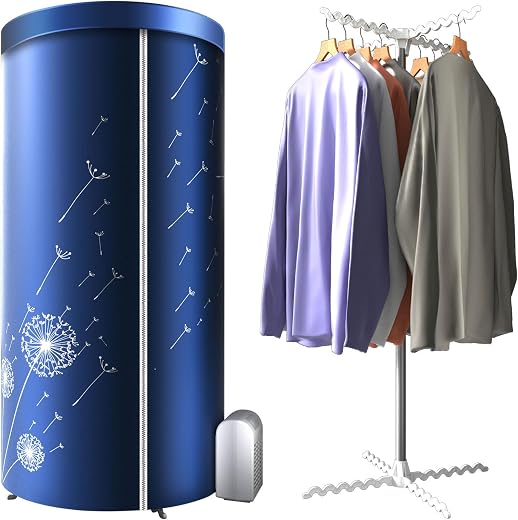
Drying pods work completely differently than heated racks. Instead of heated metal bars, a motorised fan at the base blasts 850W–1000W of hot air upward into a tent-like enclosure. You hang your clothes on regular hangers inside.
- Why it wins: Speed. While a heated rack takes 4–8 hours, a drying pod can dry school uniforms or work shirts in 2 to 3 hours. Because clothes hang vertically in hot air, it completely eliminates peg marks and drastically reduces ironing time.
- The Catch: It costs nearly triple to run per hour (~24p) compared to a static rack, and the fan creates background noise akin to a quiet hairdryer.
- Black Friday Playbook: Look for unbranded or lesser-known brand equivalents (like Beldray or Status drying pods) on Amazon—they use the exact same motor technology for 30% less cash.
👉 Check Black Friday Deals for the JML DriBUDDi on Amazon
4. Beldray / Status Winged Heated Airers
The Best Sub-£50 Budget Fix
This is essentially a traditional clothes horse upgraded with an internal heating element. It folds completely flat, sliding easily under a sofa or bed.
- Why it wins: Extremely cheap to buy outright and incredibly cheap to run. It’s fantastic for laying heavy winter knitwear flat to dry.
- The Catch: Clothes only dry rapidly where they physically touch the heated metal bars. You will need to manually rotate your garments every couple of hours to get an even dry.
- Black Friday Playbook: These are a fantastic budget impulse buy and are usually featured heavily in Amazon’s early Black Friday events.
👉 Check Black Friday Deals for the Beldray Winged Heated Airer on Amazon
💡 Expert Buying Tips for Maximum Efficiency
If you want to stop your house from feeling like a humid greenhouse, follow these two golden rules of indoor drying:
- Never Buy an Airer Without a Cover:Throwing wet clothes on heated bars in a cold room is highly inefficient; the heat just dissipates into the air. A custom thermal cover (or even a thick bedsheet draped over the top) traps the heat, creating a micro-climate that slashes drying time by up to 40%.
- Beware of the Condensation Trap:A heated airer doesn’t make water disappear—it evaporates it into your room’s air. To prevent black mould on your windowsills, you must either crack a window or place a compressor dehumidifier in the same room. The dehumidifier sucks the moisture out of the air while blowing out warm, dry exhaust, speeding up the drying process even further.
FAQs
A standard 300W heated airer uses roughly 0.3 kWh per hour, costing around 8p to 9p per hour to run in the UK. In contrast, a typical tumble dryer consumes 2 to 4 kWh per cycle, costing upwards of 60p to £1.50 per load. This makes a heated airer significantly cheaper for regular winter drying.
Using a fitted cover or draping a dry bedsheet over the frame traps warm air inside and cuts drying time by up to 40%. Additionally, rotating garments halfway through ensures even heat distribution across all layers. Pairing the airer with a compact dehumidifier also dramatically accelerates moisture removal.
Because a heated airer evaporates moisture directly into indoor air, it can lead to condensation and mould if humidity isn’t managed. Opening a window slightly or running a dehumidifier alongside the airer safely extracts water vapour from the room. Never leave a fully loaded airer in an unventilated room for long periods.
Heated airers use warm aluminium rails to dry clothes gradually over 4 to 8 hours. Hot-air drying pods use a powerful fan heater (800W–1000W) to circulate hot air inside a zipped tent, drying hanging clothes in 2 to 3 hours. While drying pods are much faster, they cost more to run per hour
Yes, Black Friday is peak season for discounts on winter energy-saving appliances across retailers like Amazon, Lakeland, and Argos. Retailers frequently bundle essential accessories—such as thermal covers and castor wheels—at no extra cost. Prices often drop by 20% to 35% during Cyber Week.
Most standard 3-tier heated airers hold between 15kg and 20kg of wet laundry, which equals roughly two full washing machine loads. Premium frames use reinforced aluminium bars to prevent sagging under heavy items like jeans or bath towels. Always check the manufacturer’s weight limit before hanging bulky garments.